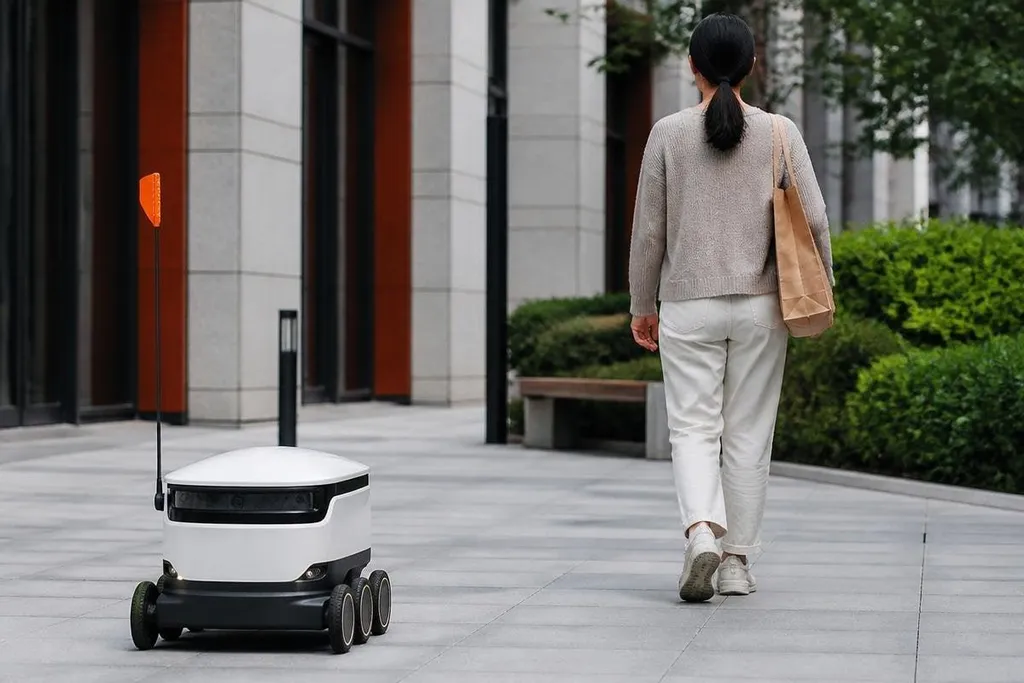
A robot can follow its software correctly and still harm people. The risk appears when its cameras, movement, or decisions affect privacy, work, safety, access to services, or a person’s chance to challenge a decision.
- Cameras can turn routine movement into a lasting record.
- Workplace robots can shift control from workers to software and managers.
- Autonomous decisions need a clear human review path.
The robot may collect more than the task needs
A delivery robot, security machine, or workplace vehicle may need cameras and location data to move safely. That same data can reveal where people go, when they work, who they meet, or how long they stop.
The concern grows when data collected for one task gets used for another. A camera meant to avoid collisions might later support worker scoring, access checks, or behavior records. People may not know what the robot records, how long the data stays, or who can see it.
The physical design matters too. A camera mounted at head height can record faces in places where people never agreed to constant monitoring. Privacy rules need to cover the machine, its software, the stored data, and the people who can request deletion or correction.
Automation can change power at work
Robots can remove people from dangerous tasks, but they can also give employers more control over pace and movement. A warehouse system may assign routes, measure pauses, or flag actions without showing the worker how the decision was made.
That creates a problem when software treats a normal human need as a fault. A short delay could come from a blocked aisle, a medical issue, or a machine error. If the system records only the delay, the worker carries the cost of a decision they could not inspect.
Robot deployment can also change who gets access to work. Workers may need new training, while others may lose tasks they have performed for years. A fair plan should include paid training, a way to challenge records, and a human decision-maker who can review the case.
Questions about work access need evidence from the machines and companies involved. Dated reporting from Robot24.com can show which tasks changed, what records the system kept, and who could review a disputed decision. That leads to the next problem: when software makes a choice, can a person stop it and ask for a reason?
Autonomous decisions need a human route back
An autonomous system may decide where to move, whom to alert, or which request gets attention first. That does not make the decision neutral. Software reflects the data, rules, and limits set by its maker and operator.
The risk is higher in policing, border control, housing, health care, or emergency work. A false match or wrong risk score can affect a person’s freedom, safety, or access to help. The person affected may not know that a robot or automated tool shaped the result.
A human review step only works if the reviewer has authority, time, and enough information to change the result. A person who can approve software output but cannot inspect its reason is not a real safeguard.
I think the central test is simple: a person must be able to know when a robot affected them and ask for a meaningful review.
Safety is a rights issue, too
A mobile robot can enter a shared space, carry a heavy load, or react to a person near its path. A failure can injure someone, but the rights question continues after the incident: who reports it, who gets the records, and who pays for the harm?
People near a robot may not have chosen the risk. Visitors, cleaners, children, contractors, and passers-by can share the same space without receiving proper information. Warning signs alone are weak protection if people cannot understand the machine’s limits or predict its movement.
Manufacturers and operators need records that show what the robot sensed, what it did, and which safety limits applied. Those records should be available to investigators and, where lawful, to the person harmed.
A practical check before deployment
Use these questions before a robot enters a workplace or public space:
- Purpose: What task needs a robot, and what data does that task require?
- People affected: Who may be recorded, moved, scored, denied access, or placed near danger?
- Human review: Can a person pause or reverse a decision, with enough time and authority?
- Data control: Who stores the records, for how long, and who can correct them?
- Safety proof: What tests cover bystanders, unusual conditions, and equipment failure?
- Redress: How can a person report harm and receive a clear answer?
A robot should earn permission through its behavior, not through a label such as “autonomous” or “smart.” The open question is whether operators will build review, privacy, and redress into the system before a person has to demand them.